Hey everyone! Welcome to my new blog where I’ll be diving into all things Data Engineering, Data Science, and Data Analysis. Today, I’m excited to share my first post, which is all about how machine learning is transforming the automotive industry. I have to say, machine learning has been a relatively latecomer to the auto production scene, but its adoption has been steady. I remember my first serious project using ML methods back in 2016. Back then, these techniques were fringe and hardly noticed by the higher-ups, though it did earn me a bit of fame within my department—I was a pioneer, after all. Nowadays, ML is used in every department, even in the legal teams of automotive companies.
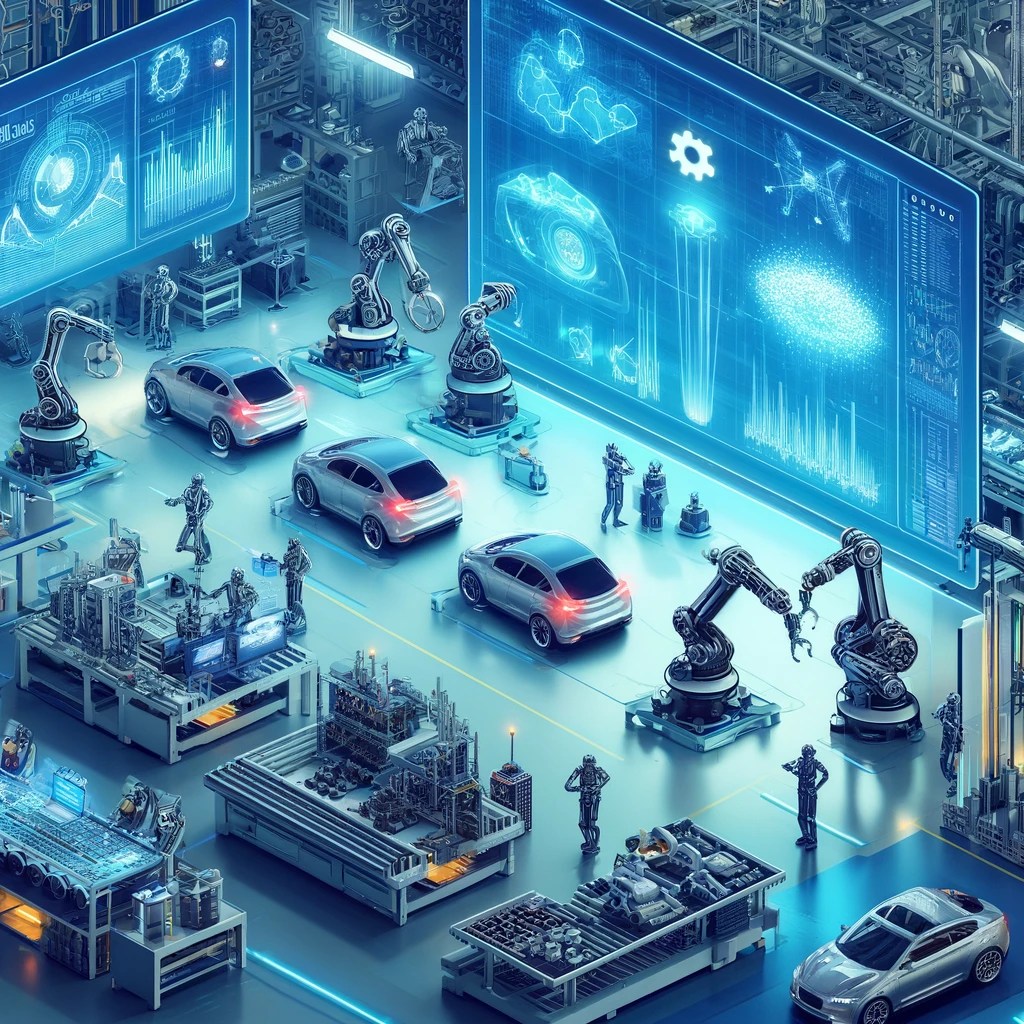
One major area where machine learning shines is in demand forecasting. Predicting demand accurately is crucial for managing supply chains, ensuring that there are always enough products without overstocking and wasting resources. This can be particularly tricky in the automotive sector because of something called “intermittent demand,” where some parts are needed sporadically. Traditional methods like Croston’s technique try to handle this by predicting non-demand periods separately from demand periods. But with machine learning, one can leverage more sophisticated methods and even use data from similar products to improve predictions.
During car development, for example, Mercedes Benz has used data science to streamline their development process. By analyzing vast amounts of data from production and design, they’ve developed methods to identify which parts and connections are most likely to need changes. This proactive approach is particularly valuable in the early phase of car development. During this stage, developers know that changes in design will happen, but they don’t always know exactly which parts will need altering. Making changes early on is crucial because while it’s still possible to make adjustments later, it becomes more complicated and expensive. This reminds me of a project I worked on, classifying sheet metal joints to predict whether a joint would meet standards or fail. The challenge was that we had very few data points to work with, and the dataset was heavily skewed towards successful joints. To overcome this, we collaborated with lab experts to create rules that helped us generate synthetic data. For example, if a joint with specific materials and thicknesses worked, we assumed similar combinations would also work. This approach expanded our dataset from less than a thousand to over two million entries, leading to a highly reliable model.
In another part of the industry, the durability of car components like suspensions is a big concern. These parts face constant stress from road conditions and engine vibrations, which can lead to material fatigue and failures. Machine learning, especially signal processing techniques like the Wavelet Transformation, helps predict the lifespan of these components more accurately. By analyzing vibration signals, one can detect early signs of wear and tear, ensuring that parts are replaced before they fail. I read about how Porsche does this, and it was very impressive.
When it comes to sustainability, the concept of a circular economy is gaining traction. This involves reusing, recycling, and reducing waste. For the automotive industry, sharing data across companies is essential to make this work. Researchers have developed models to standardize data interpretation, ensuring everyone is on the same page. This way, companies can efficiently reuse materials and reduce their environmental impact. Especially in times of electric vehicles, the recycling of battery components is a task that all car manufacturers have taken on.
I’ve also seen machine learning make waves in human resources. Traditional interviews are increasingly being replaced by asynchronous video interviews, where candidates record their responses to interview questions. Many companies are now using AI to evaluate these videos, saving time and reducing costs. This AI can assess personality traits like extraversion and conscientiousness, which are strong indicators of job performance. However, I have some serious reservations about this approach. First, AI can sometimes miss the nuances of human interaction, leading to less accurate assessments of a candidate’s potential. Second, there’s the risk of inherent biases in AI algorithms, which can unfairly disadvantage certain groups of people. So, while it’s fascinating to see these tools in action, I believe one should tread them carefully.
Deep learning is also enhancing quality assurance. For instance, BMW explored using deep learning to predict the outcomes of quality assurance tests on their production line. By analyzing vehicle configuration and process data, they developed a model that could identify which cars were likely to pass or fail the tests. This allowed them to skip unnecessary tests on “low-risk” vehicles, saving time and resources.
Even the assembly of complex components like wiring harnesses benefits from machine learning. Traditionally, the quality inspection of these harnesses is manual and prone to errors. However, by training deep learning models on real and synthetic data, researchers have developed robust automated inspection systems. These systems can accurately detect faults in both rigid and flexible components, improving overall production quality.
And let’s not forget the impact of connected cars. Privacy, especially for us Europeans, is a big deal. These vehicles generate massive amounts of data, which can be monetized by manufacturers. However, this raises privacy concerns. It’s crucial to understand how drivers feel about their data being collected and used. Studies have shown that while drivers value privacy, they also appreciate the benefits of data-driven services. Machine learning methods are used to remove personal data, helping to address these privacy concerns.
Finally, machine learning is helping reduce energy consumption in car manufacturing. By analyzing the energy use across different plants, automakers can identify inefficiencies and implement improvements. This not only cuts costs but also helps reduce the industry’s carbon footprint. Comparing different plants is a common method used by automakers to determine which ones are operating most efficiently.
So, whether it’s in predicting demand, improving component durability, streamlining production, enhancing sustainability, or ensuring quality, machine learning is proving to be a game-changer in the automotive industry. I’m excited to see how these technologies continue to evolve and make cars safer, more efficient, and environmentally friendly.
Stay tuned for more insights and stories from the world of data science! Feel free to share your thoughts and experiences in the comments below. Let’s keep this conversation going!

 DataScientist.blog
Leave a comment